

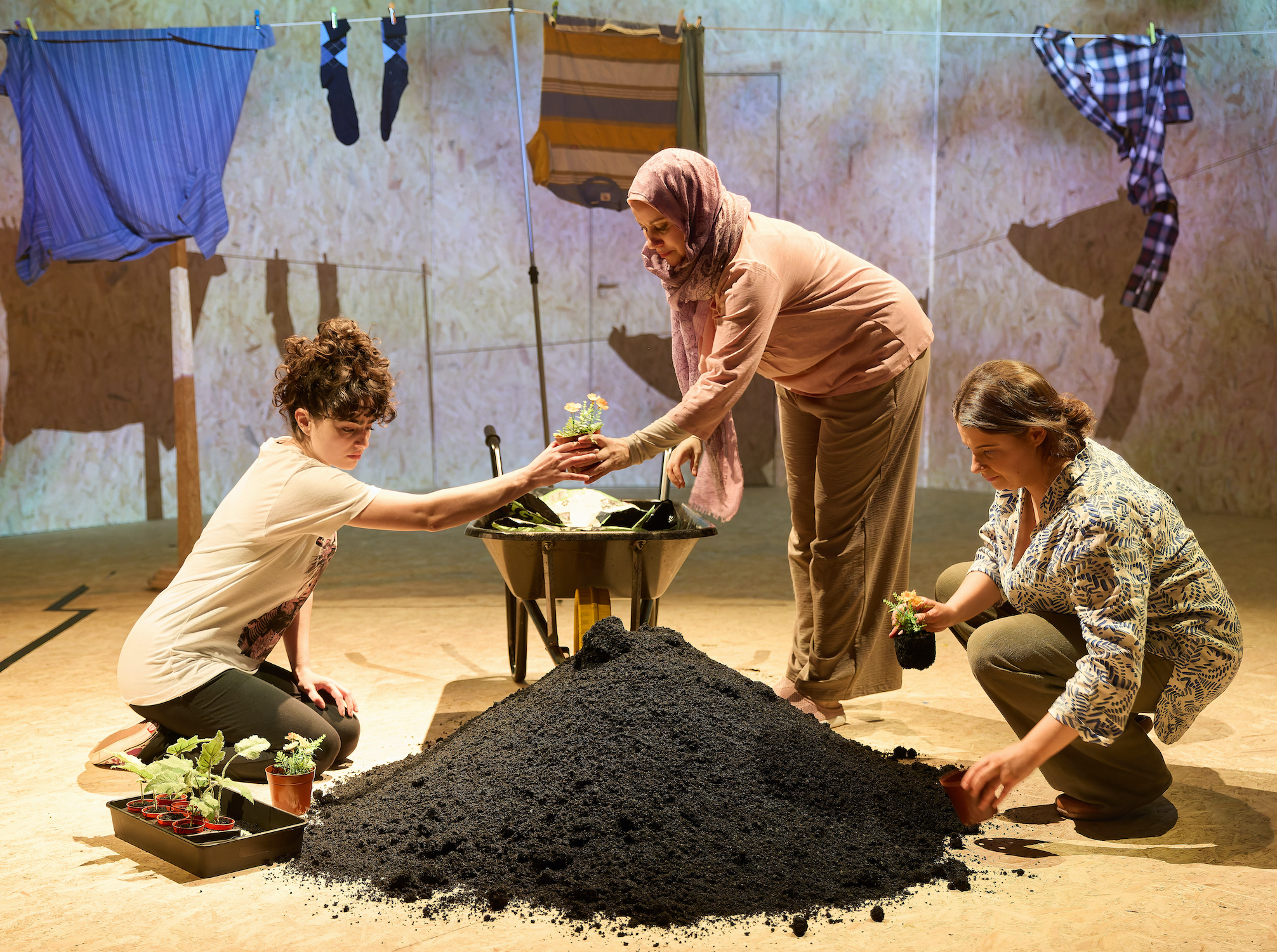
Living is a testament to Sheffield and how some things never change… yet somehow always do.
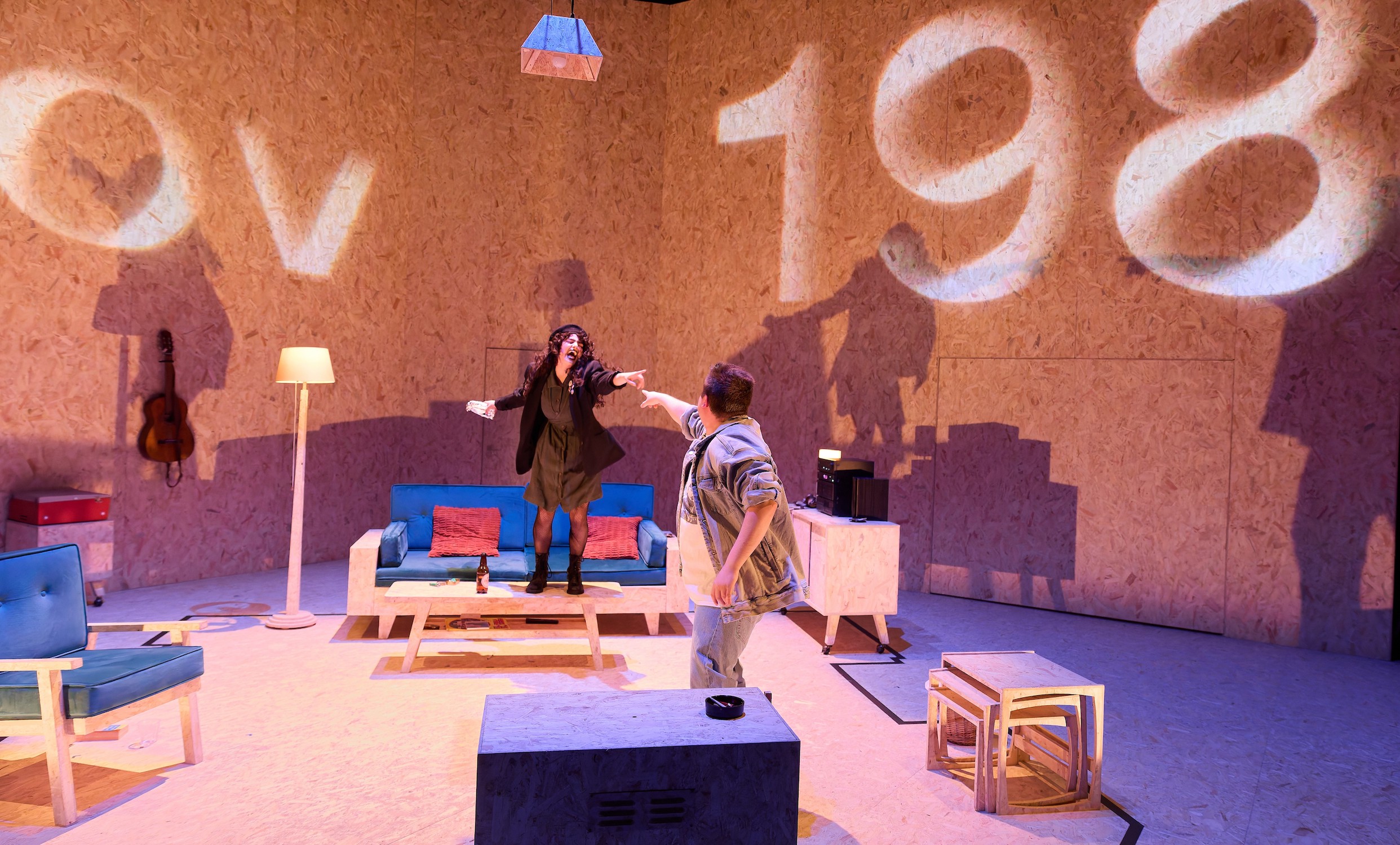
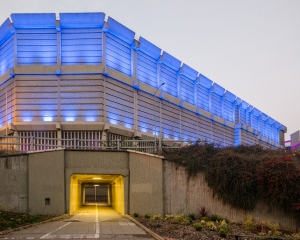
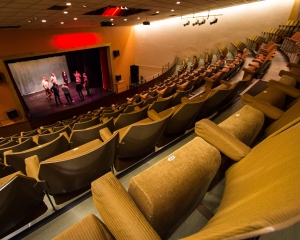
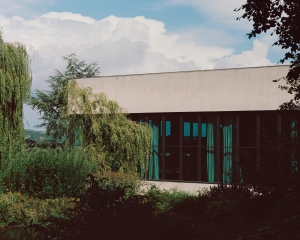
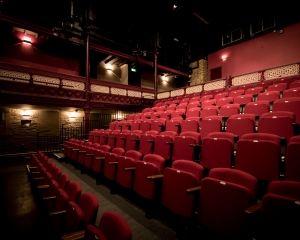
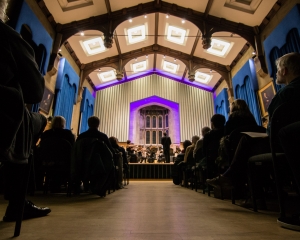
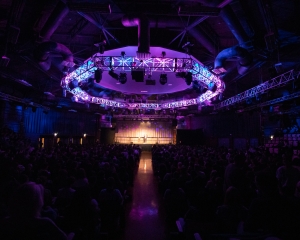
The Tanya Moiseiwitsch Playhouse, which has always felt a bit like a cool and dramatic secret, is the perfect stage for this play based in one Burngreave living room. In the angular (but homey) space, we follow Kathy and Brian throughout their ever-changing lives.
From 21st July 1969 to some time in the very urgent present, writer Leo Butler and director Abigail Graham tell a long generational story in a series of conversations, conflicts, costume changes and musical shifts. In under three hours and with seamless transitions, we see decades of power struggles between left and right, Marxism and capitalism, feminism and patriarchy, racism and inclusion, parents and their kids, and between youth and old age.
There are complicated family and neighbourly dynamics that are well explored, and I must note the four supporting actors who brilliantly play a host of characters. Living is essentially a story about everyday family life and the wide-reaching sting of politics, as Butler pays homage to Sheffield’s rich left-wing history.
It was a pleasure sitting in an audience of locals, constantly laughing at inside Sheffield jokes and old references. There were moments of intensely sad silence too. Get you a play that can do both.
And speaking of doing both, part of an already brilliant cast is Liz White, who played a well-rounded and loveable Kathy through the ages.
Some might feel this play is about the encroaching of modernity on a family in the north of England. Others will say it’s about loud changes in culture that creep through the family curtains. Or maybe about how love stands the test of time. All feel true, but from the final scene of a loyal neighbour watering a sapling in the family’s garden – it’s clear Living is also about the ever-growing nature of community.
- Words by
- Wemmy Ogunyankin
- Featured in
- Theatre picks