

Oladipo Agboluaje and Mojisola Kareem’s Yoruba retelling of Shakespeare’s Macbeth adds powerful layers of meaning to an already deep and dark tragedy.
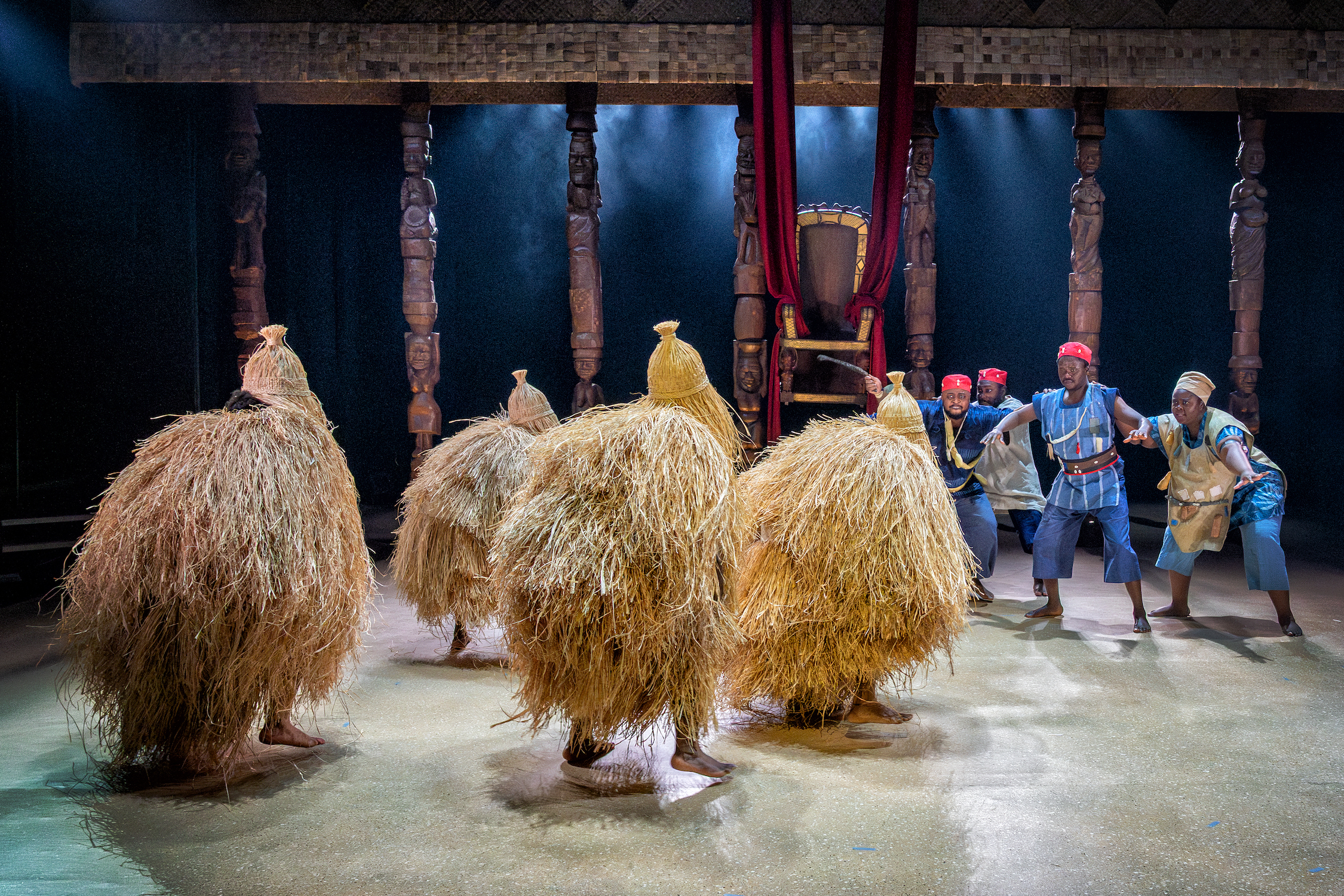
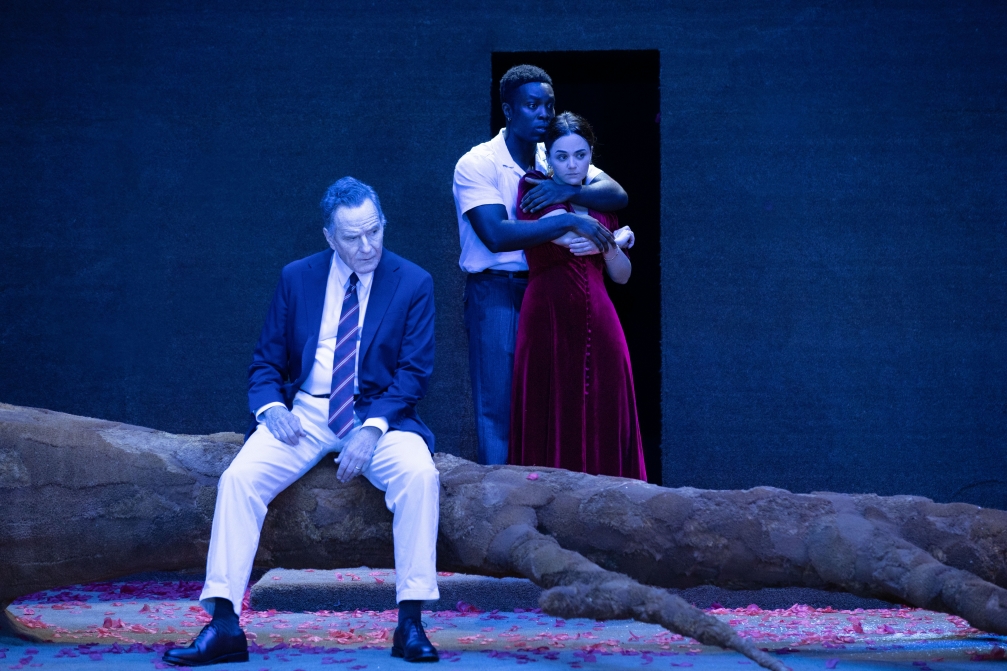
Macbeth is a story of extremes, one that is best explored with nuance. So, it was great to be welcomed by a simple set of Yoruba browns and wooden carvings and sculptures as pillars – almost as a metaphor for the burden of unchecked strength we’ll come to see.
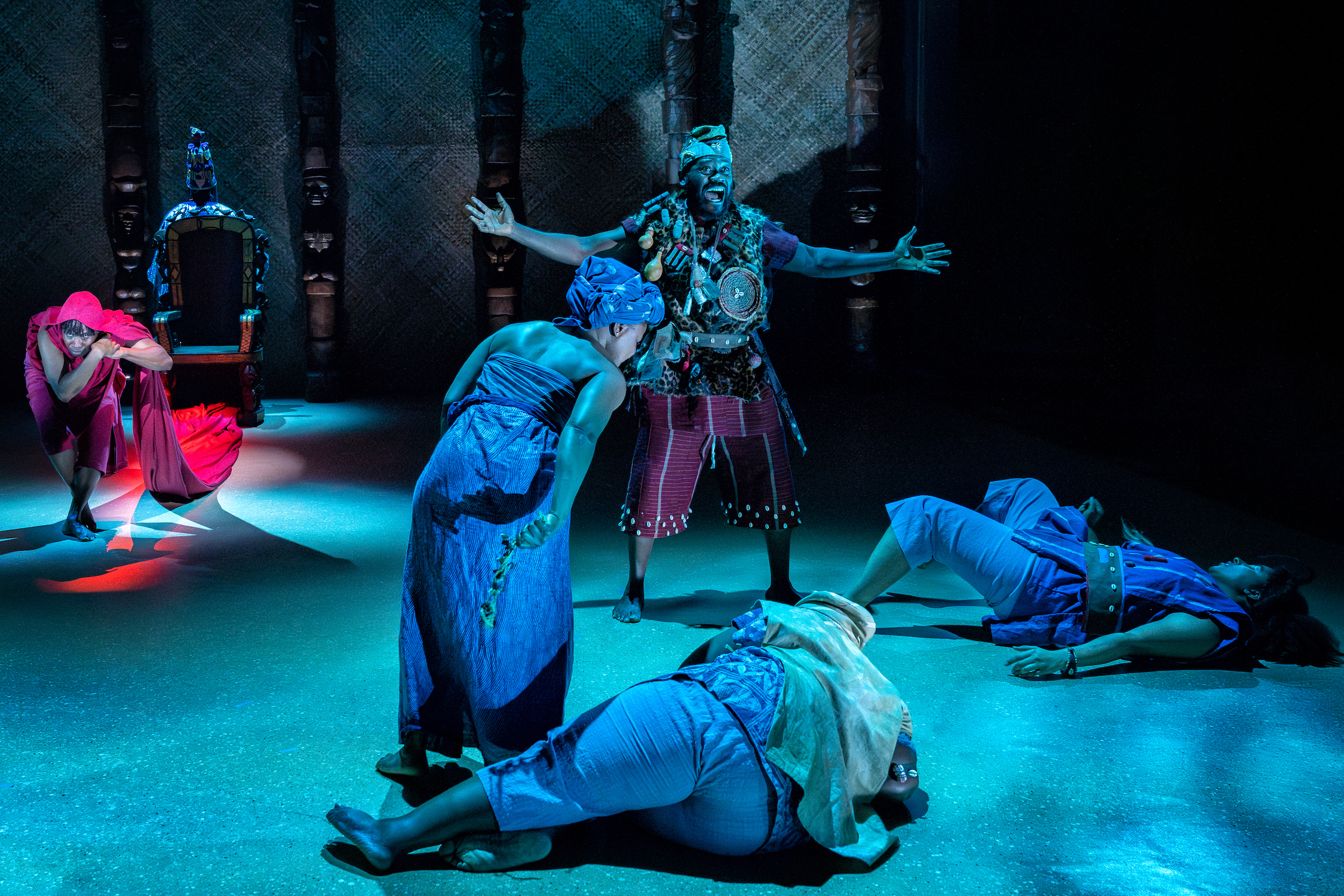
And just in front of the pillars was a solitary throne that haunted the entire play.
With their adaptation, writer Agboluaje and director Kareem highlight just how much Shakespeare’s classic themes of ambition, hatred, loss, desire, love and madness can be found in Yoruba history and mythology. The original Macbeth is set in 11th century Scotland, evidently the story places so well in 19th century Oyo. A time of chaos and displacement across much of Nigeria, as militaries drew blood for power and prosperity. Crown of Blood is about more than one ambitious man and his wife – but a cultural tale of how tradition can be twisted for personal gains. Again, such Yoruba themes!
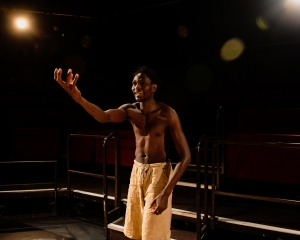
Now the main character could be argued to be General Aderemi played by Deyemi Okanlawon who gave a fantastic performance as the ‘common’ soldier on a quest to become King. Yet I couldn’t help spending most of my time with his wife Oyebisi, played by the brilliant Kehinde Bankole. Her Yoruba name, which translates to ‘birth brings honour’ or ‘to add/bring honour’ feels an intentional signal of how much her pain is an undercurrent for the plot. Aderemi is a tool for her revenge, and a way out of her unfortunate past (and childless present). She is a villain, a victim, myth… even legend, as the brilliant narration by Toyin Oshinaike as Arokin reveals. I could have seen more of her.